
After a few days of driving in Scotland, I gradually became more comfortable. However, I can’t say I ever got to the point where driving was anywhere near to being enjoyable dealing with narrow, windy roads with two-way traffic.
Driving challenges aside, we thoroughly enjoyed our time in Glencoe. After a wonderful week there, we set off for a 3.5 hour drive north to Ullapool to catch the ferry to the Isle of Lewis and Harris. Although one island, it is often referred to as the Isle of Lewis and the Isle of Harris with Harris being the smaller, southern region. Combined, they are the largest island in the Outer Hebrides. We had pre-booked our ferry tickets (recommended), so check-in was quick and easy.
We arrived in Stornoway (on Lewis) on a dark and rainy night, which contributed to missing one of the last turns to our destination. Never-the-less, after a wee bit of backtracking, we checked into our apartment in Lews Castle.
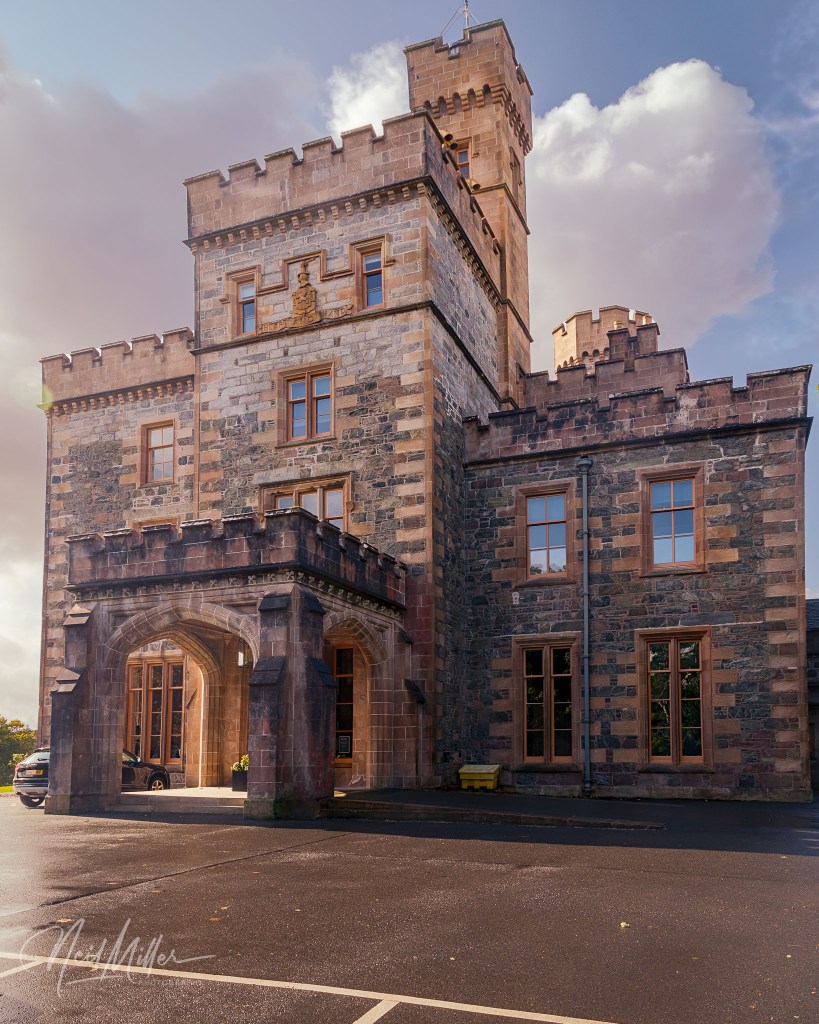
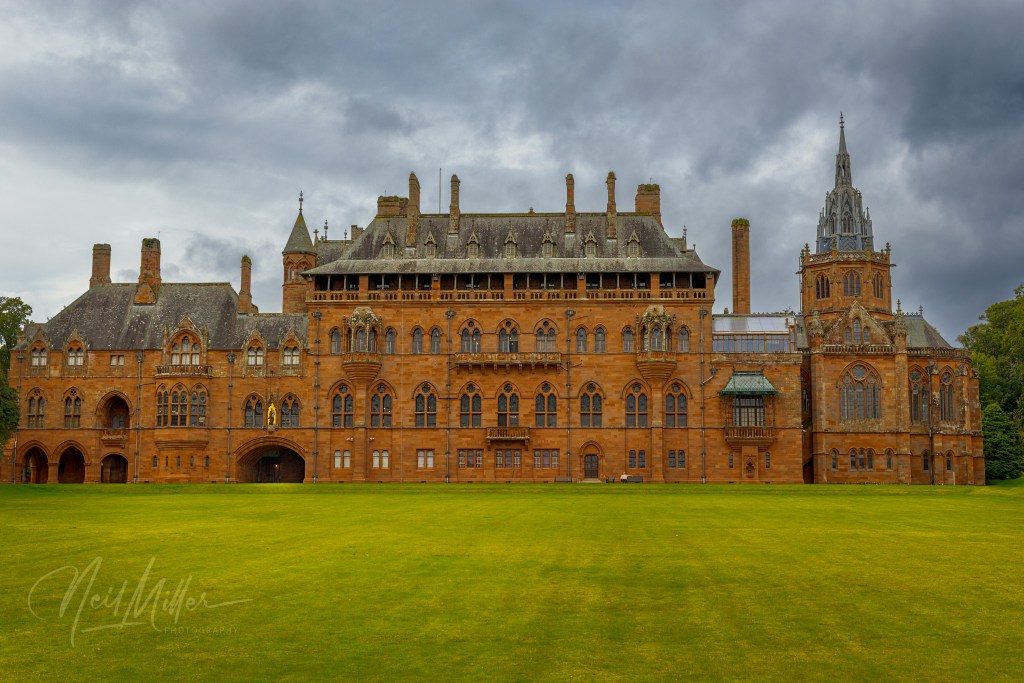
The Victorian era Lews Castle was originally built (1845-1850) as the home for Lord James Matheson who had bought the Isle of Lewis using the fortune he had built from the Chinese opium trade. In 1918, Lord Leverhulme (William Hesketh Lever who founded Lever Brothers) purchased Lewis and subsequently made improvements to Lews Castle. In 1923, he gifted Lews Castle and surrounding estate to the people of Stornoway Parish. During World War II the castle served as a naval hospital and subsequently was the home of Lews Castle College. It’s use as a school ended in 1988 due to developing structural problems. Ultimately the castle was renovated and redeveloped as a mixed use building. The public access main floor consists of rooms that can be hired for special occasions, a cafe, a small gift shop, and a museum. The upper floors contain short-term stay apartments.
Click on any image in the galleries below to open a full-sized image.
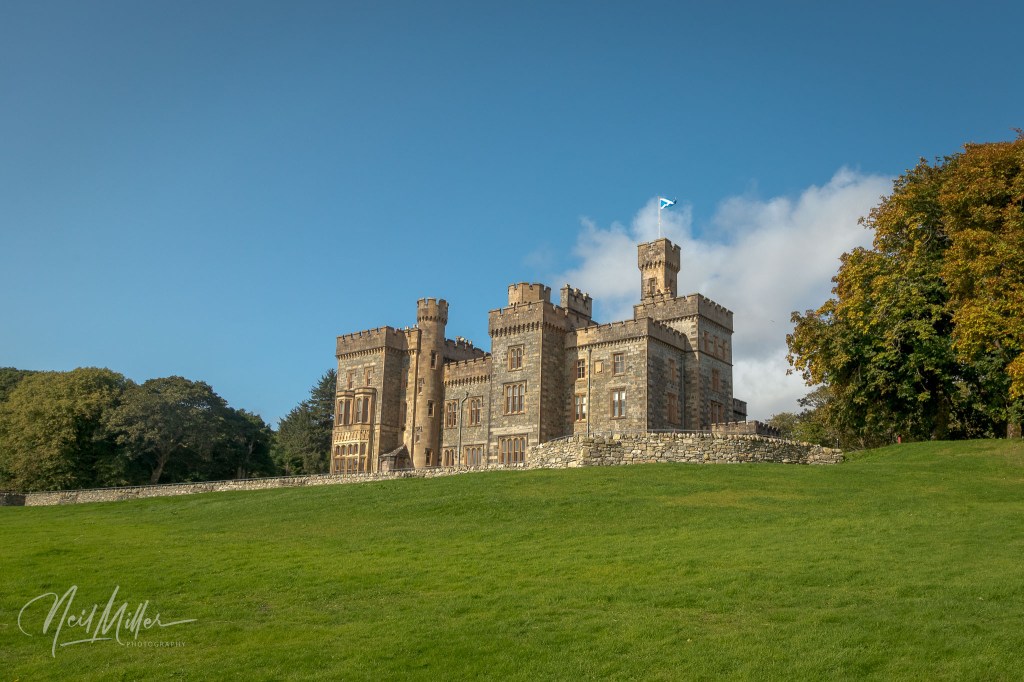
Lews Castle 
Dining Room 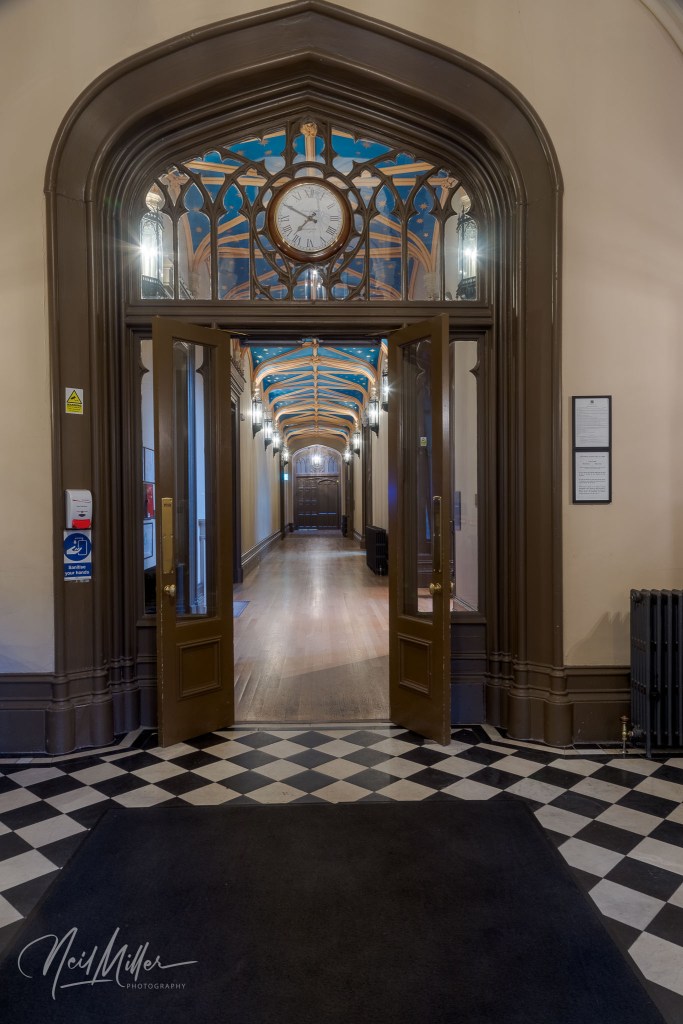
Foyer 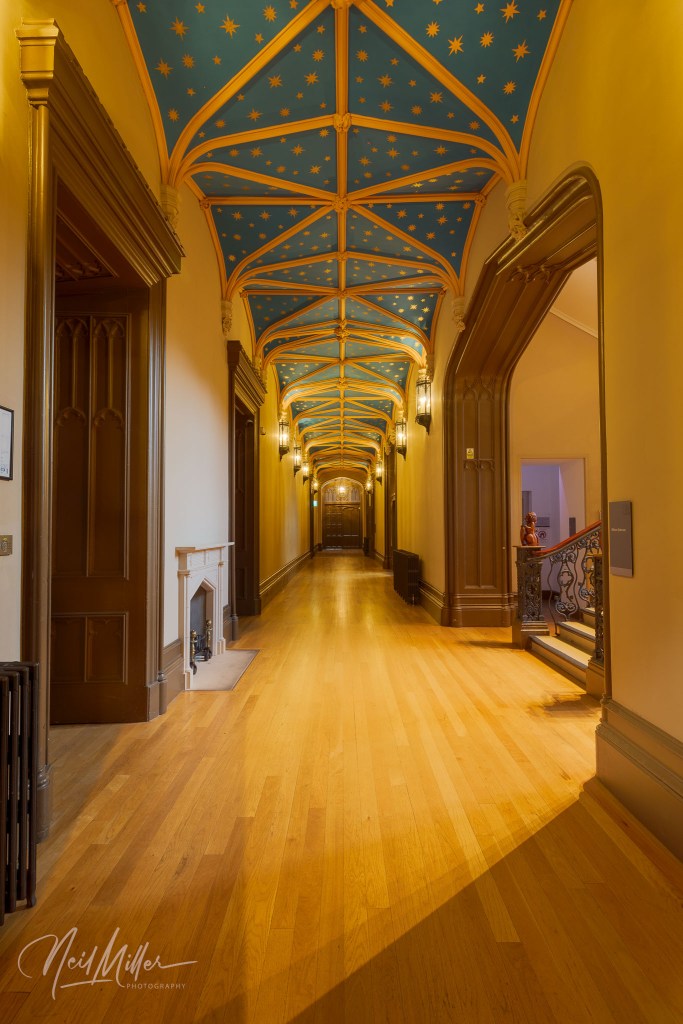
Hallway 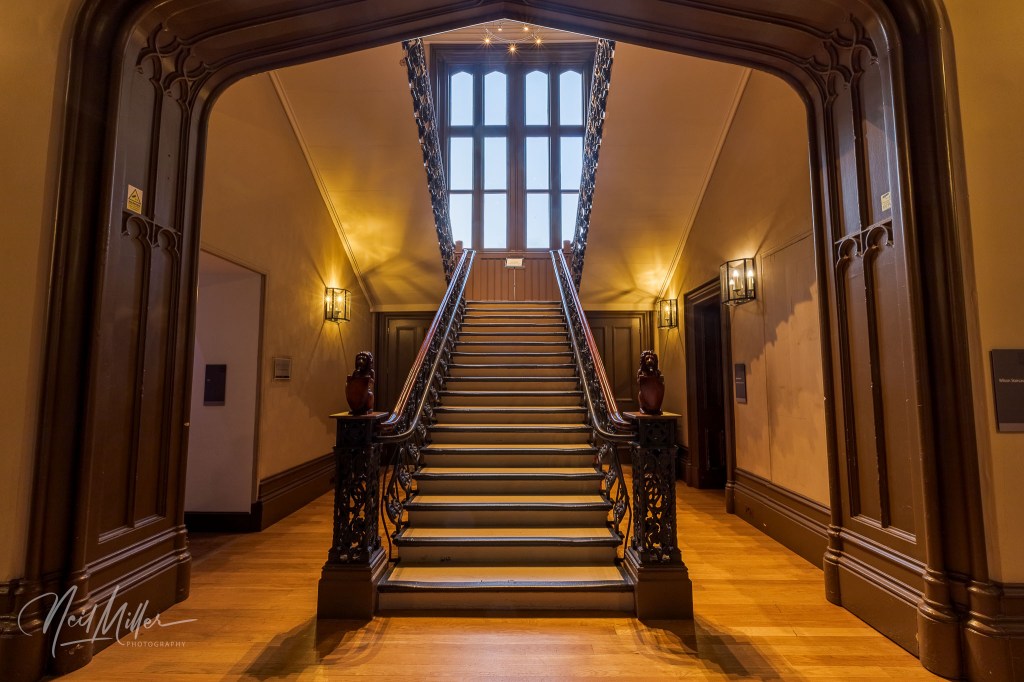
Stairway 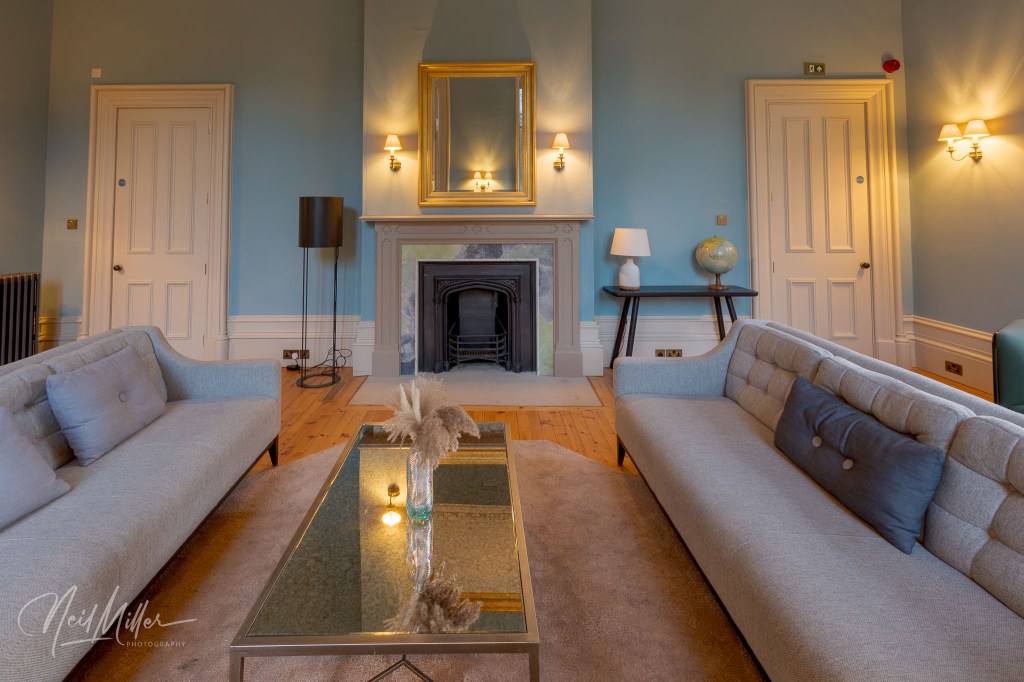
Guest Lounge 
Castle at Night 
Lews Castle
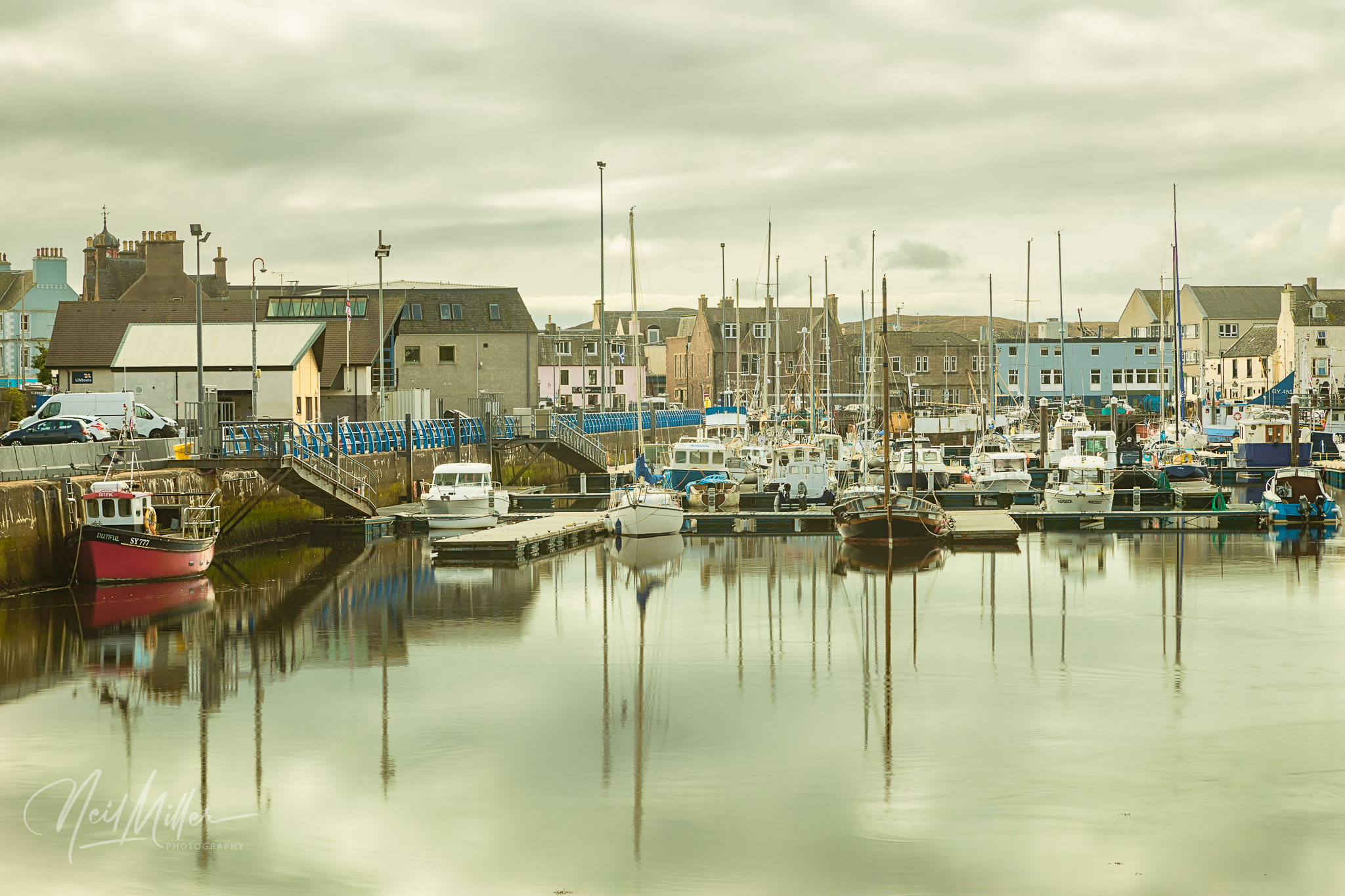
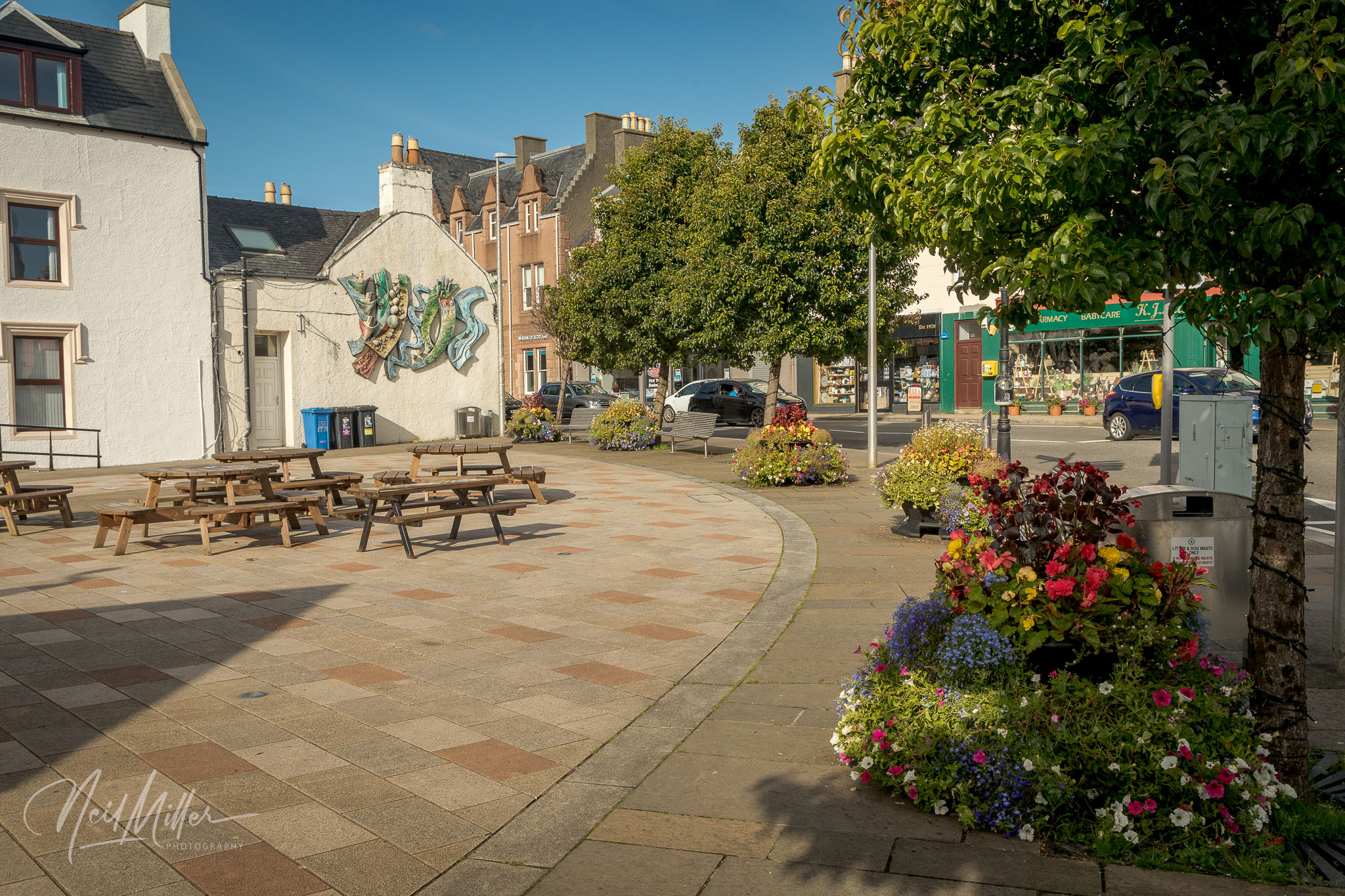
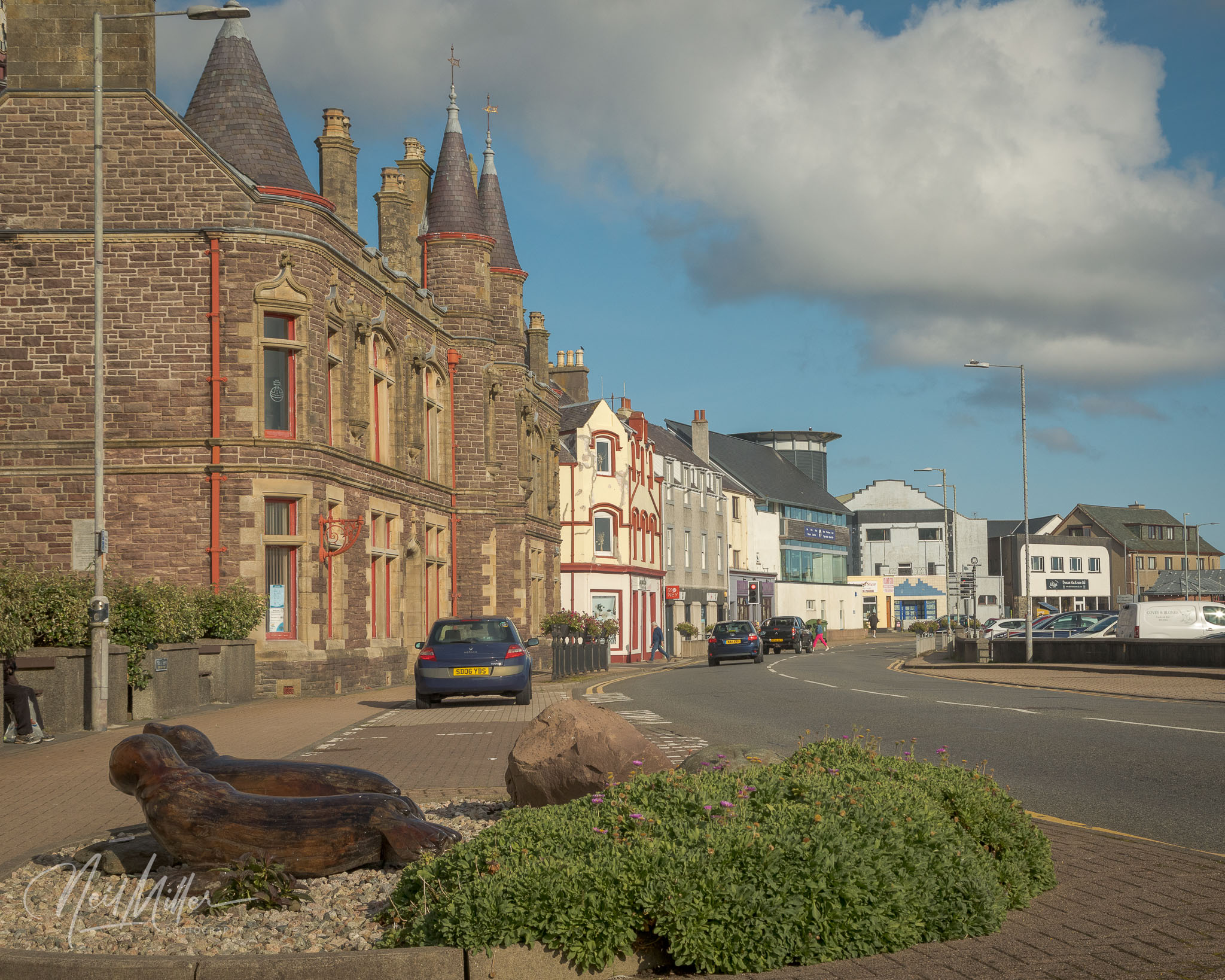
Stornoway is the largest town in the Outer Hebrides and is the administrative center for the island.




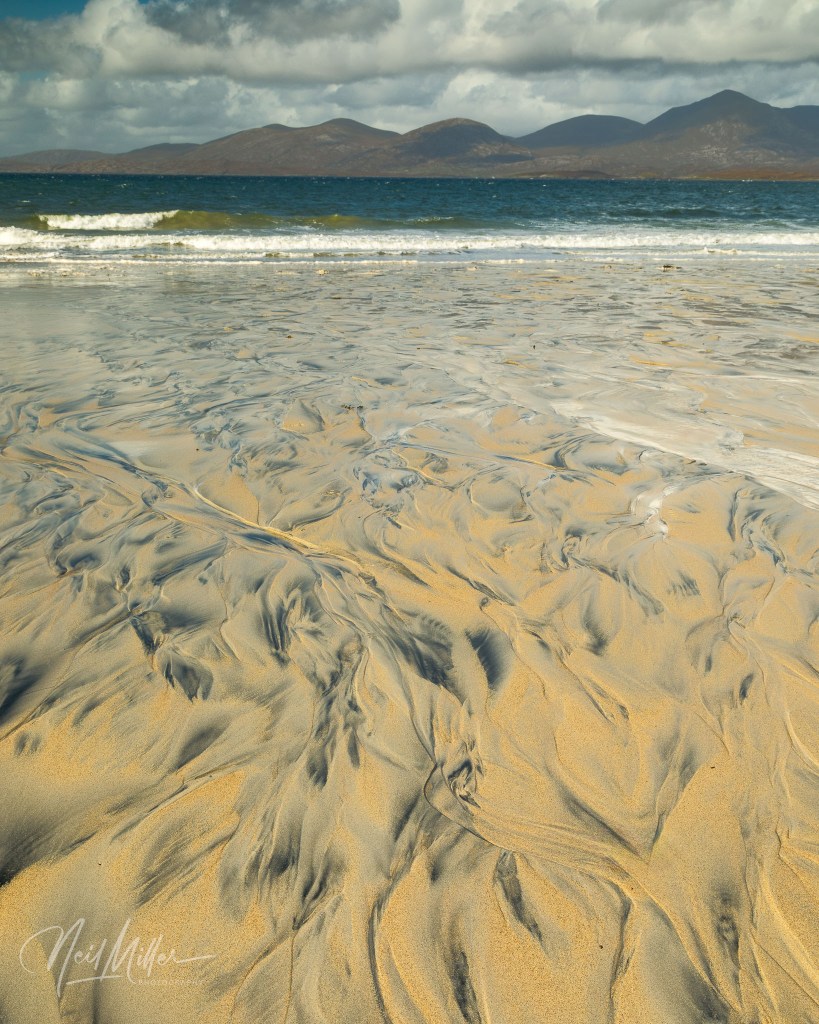
Harris is know for its beautiful beaches. Perhaps one of the most beautiful, and well known, is Luskentyre Beach.

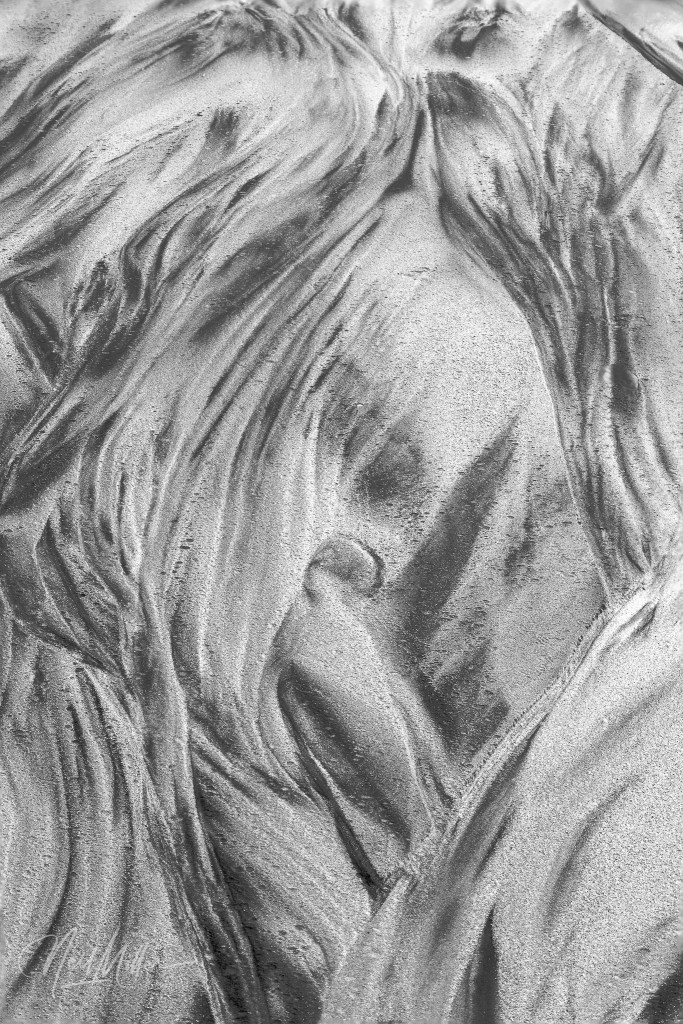
Sand dunes capped with grasses, an expansive beach, beautiful views and interesting patterns in the sand all make for some great photographic opportunities.


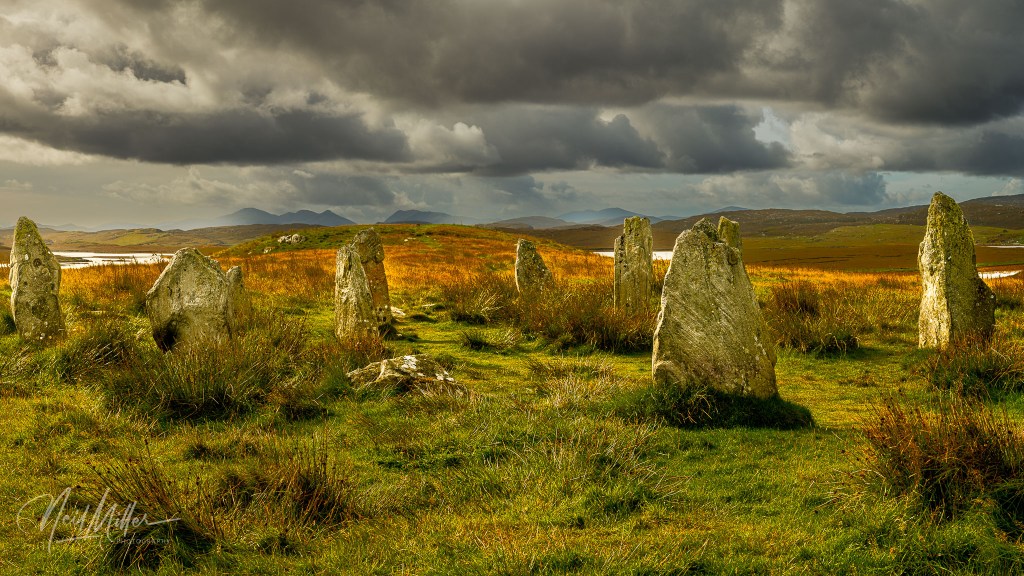
The Callanish Standing Stones on the west coast of Lewis date back to Neolithic times. The precise purpose of these stone circles is up for debate. There are actually several circles: the image below is from Callanish 3.

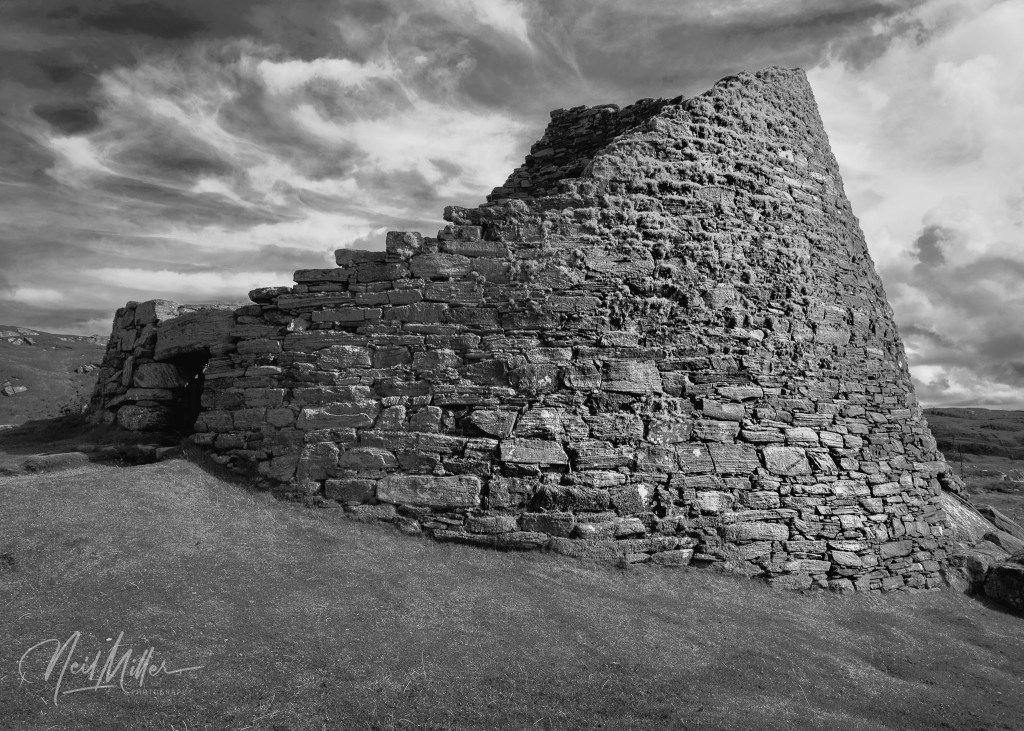
Dating back to the Iron Age, a “broch” is a double walled stone tower that is thought to have served as a fortified dwelling. One of the largest remains of a broch on Lewis is the Carloway Broch also known as Dun Carloway Broch. It rises to a height of 9 meters.


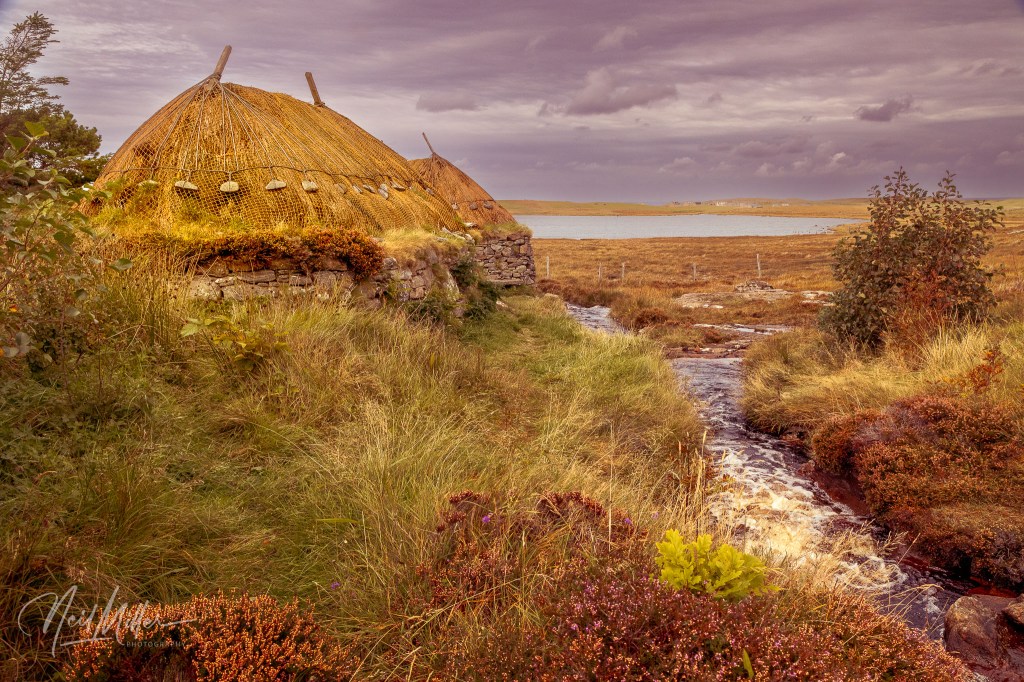
Not far from Carloway is the Norse Mill and Kiln. The kiln was used to dry corn before being milled. The mill used the stream running past it to rotate the paddles powering the mill. In the photo on the left below, the kiln is the long building on the right. Both buildings have been restored.

A short distance away, near Shawbost, you can find some of the rugged coastline that Lewis is known for.

At the extreme north end of Lewis is the Butt of Lewis Lighthouse. Dating back to the 1860’s it is built of red brick. The light was automated in 1998.


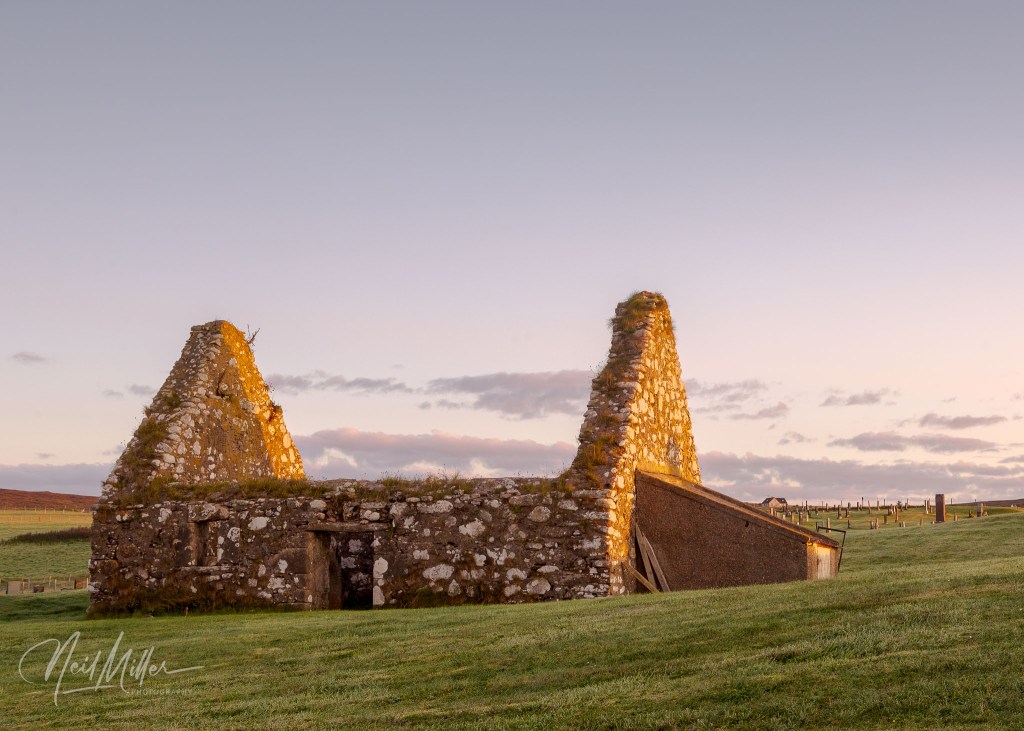
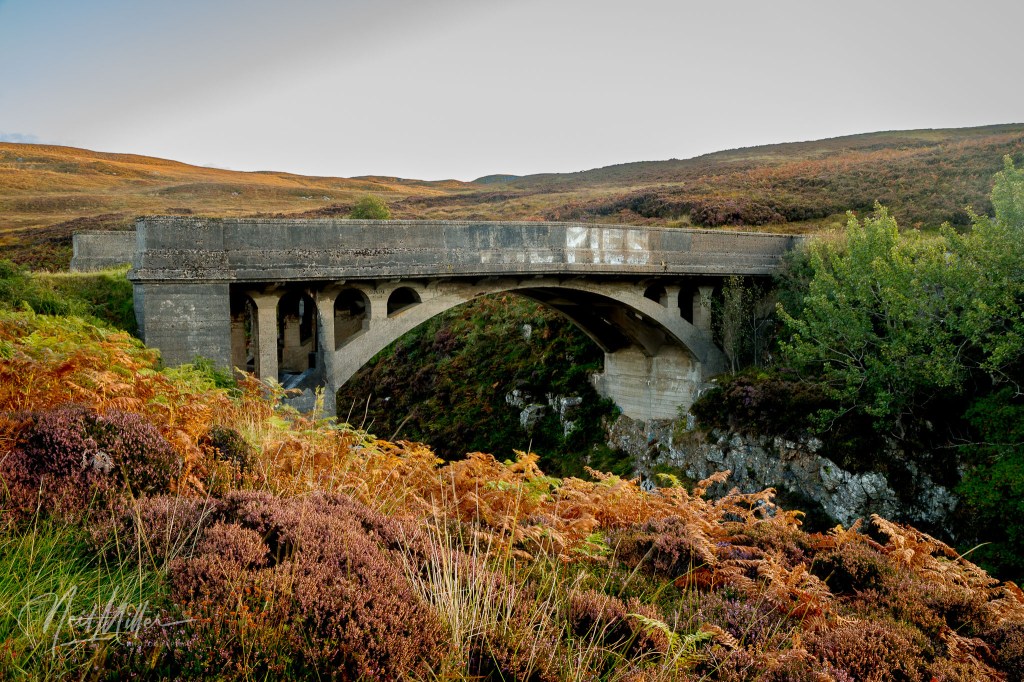
One early morning outing took me to The Bridge to Nowhere, Traigh Ghearadha, and Traigh Mohr. Along the way I found the ruins of an old cottage (left).
At the end of a road in Northeastern Lewis, just past the village of Tolsta, is the Bridge to Nowhere. In the early 1900’s, Lord Leverhulme (mentioned above as having bought Lewis in 1918) had ambitious plans to build a road from Toslta to Ness. The road only ever got as far as the end of this bridge, hence its moniker.
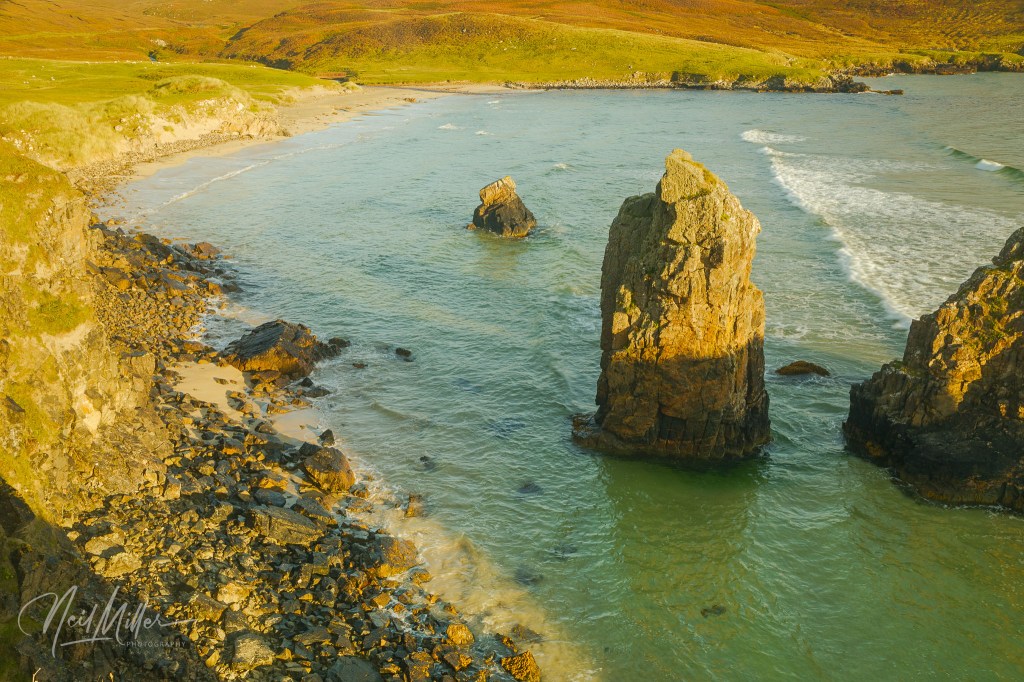
Nearby is the beautiful Traigh Ghearadha (Gary Beach).


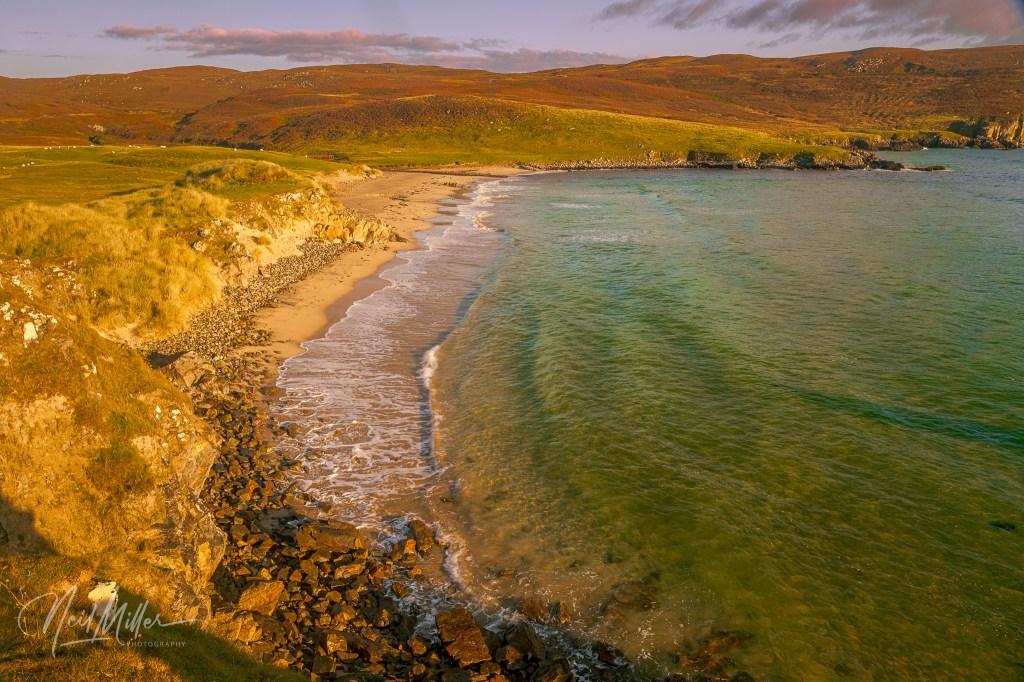


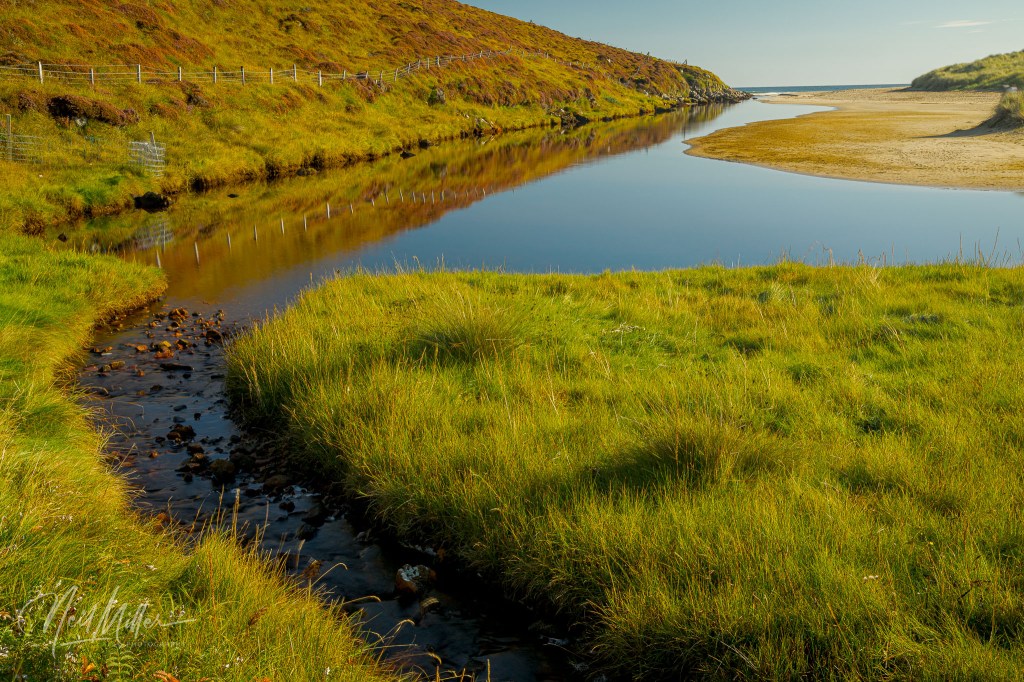
A short drive back towards Tolsta is Traigh Mohr.
A short drive northeast of Stornoway is the village of Portvoller and the Tiumpan Head Lighthouse. The lighthouse was built in 1900. In 1956, Queen Elizabeth, along with seven-year-old Prince Charles, visited the lighthouse. The future King sounded the first blast on the newly installed fog horn which, I’m sure, would have been a thrill for any 7-year-old!


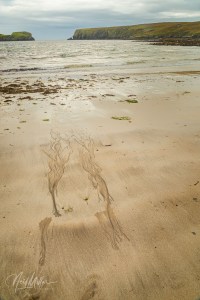

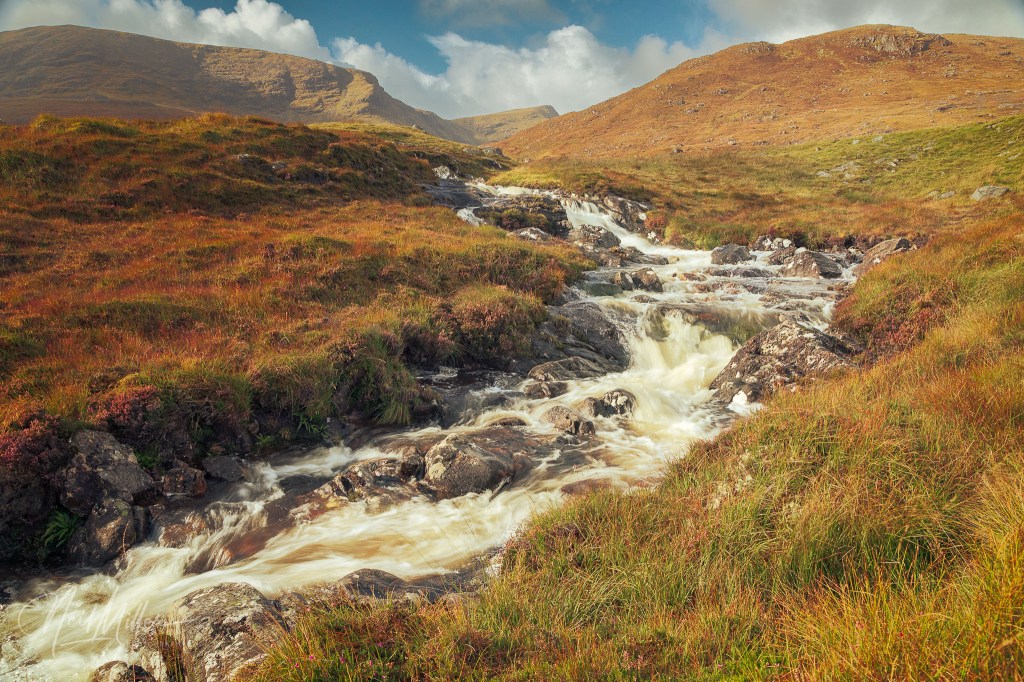
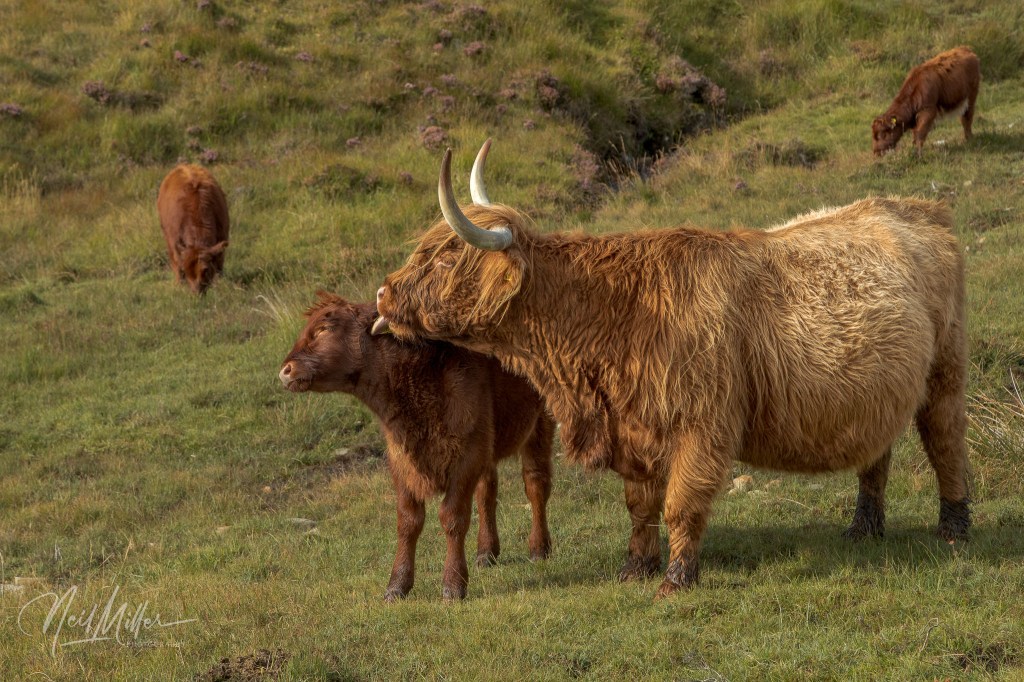
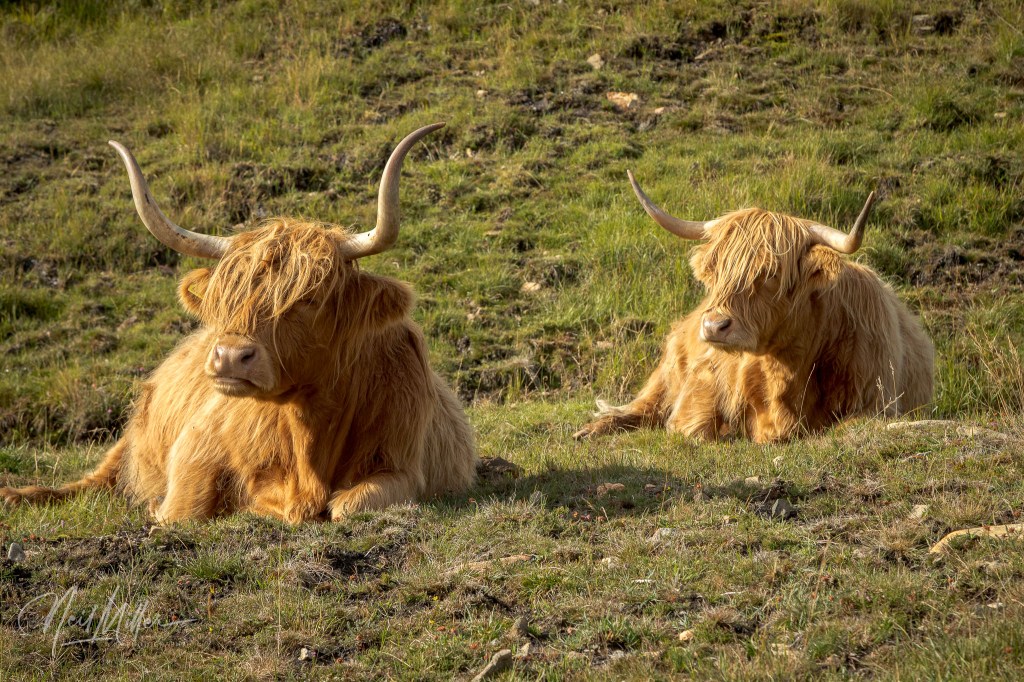
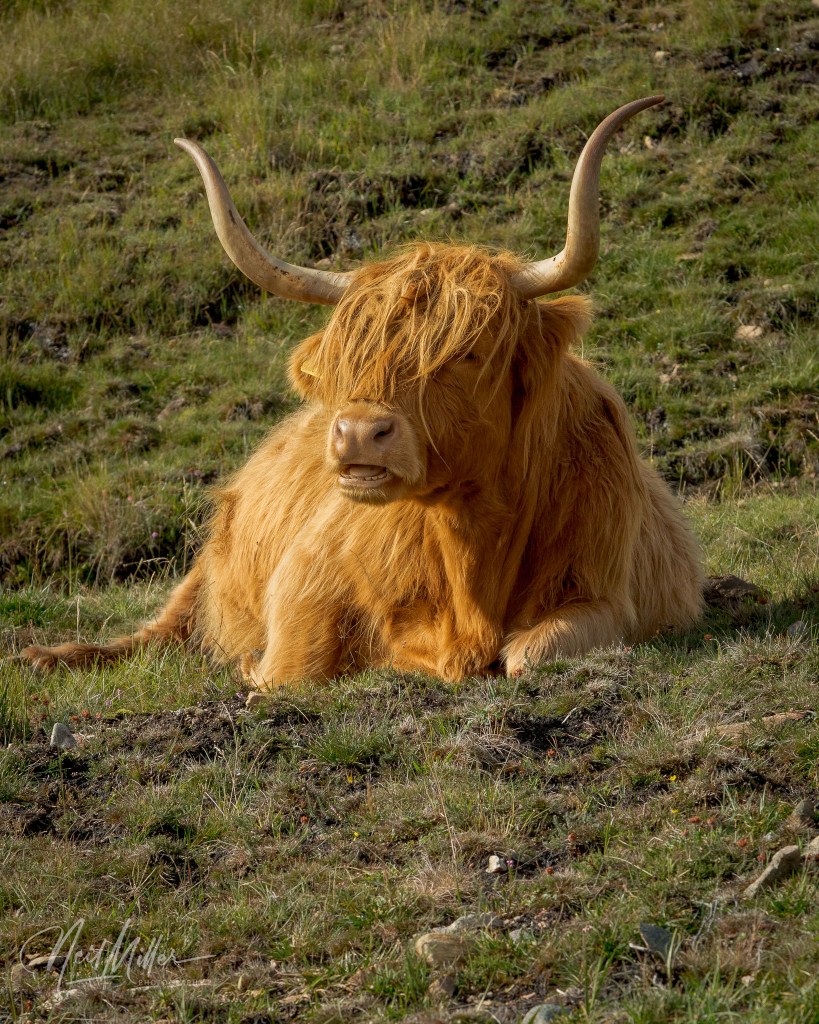
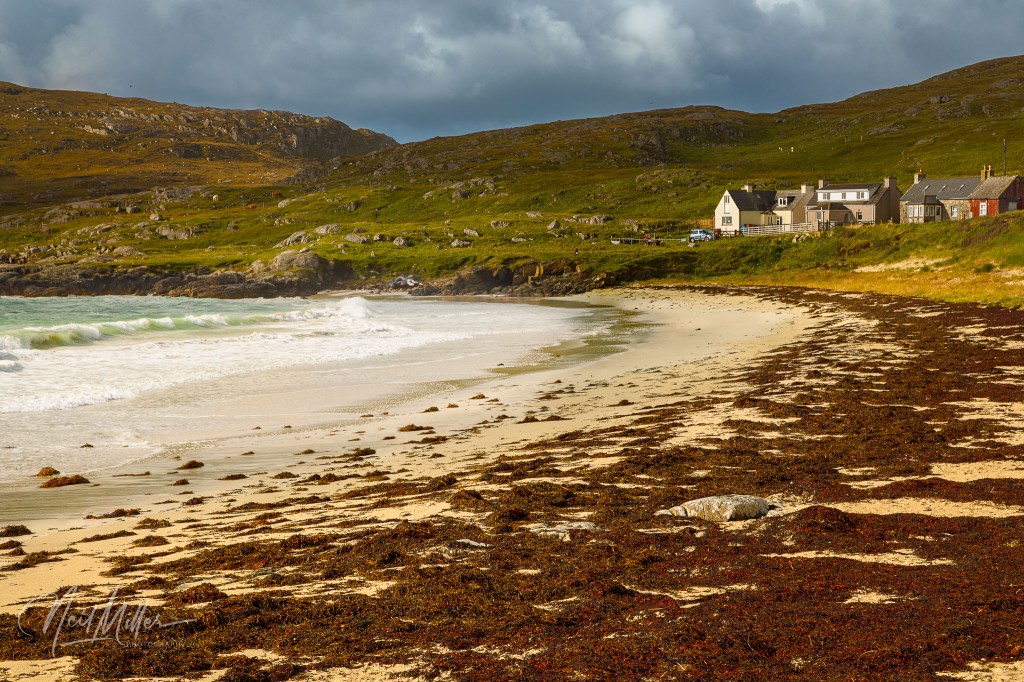
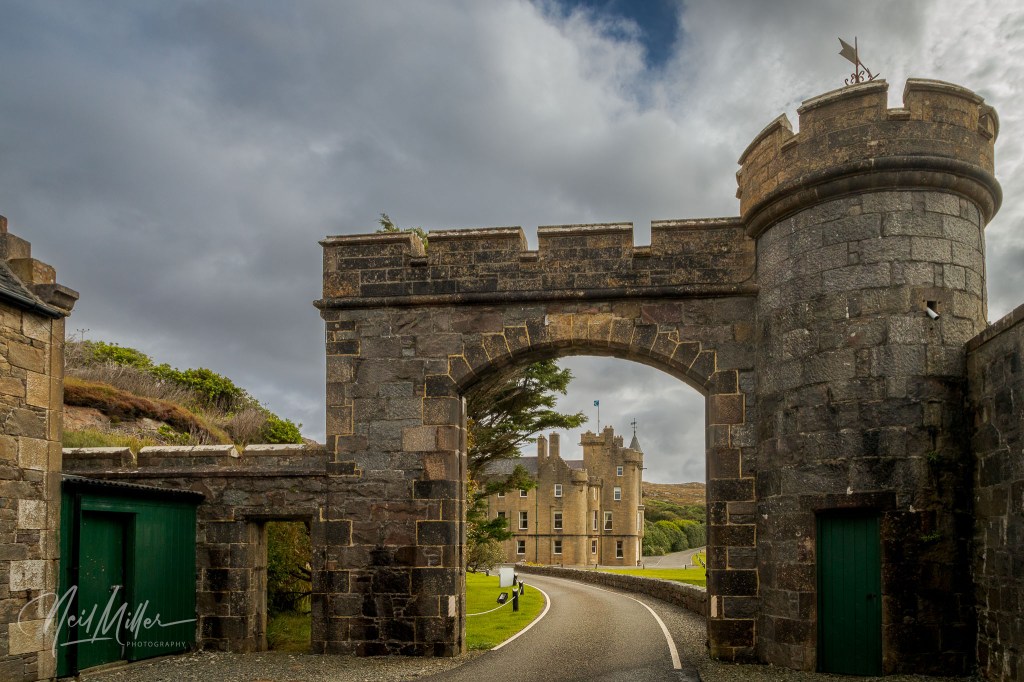
For our last full day on the island, we ventured back to Harris and to Huisinis Beach. Along the way we were treated to waterfalls, Highland coos, and a castle built right beside the road (Amhuinnsuidhe Castle). Should you have some spare cash sitting around, you and 17 friends can book the castle for 7 days for a week of hunting and fishing.


All too soon our week on Lewis and Harris drew to a close and it was time to take the ferry to our next location. Stay tuned for my next post on our Scotland trip.
If you enjoy my photography, please visit my gallery website at neilmillerphotography.com – just click on the Photo Gallery tab at the top of this page. As I will soon be updating my galleries with my favourite images from Scotland, be sure to sign up for my newsletter to be notified when my website is updated.
 Wind At Your Back
Leave a comment