
Following a restful night in Stettler, Alberta, our tour of various small communities in central Alberta continued. As mentioned in Part 1 of this series, my friend and fellow photographer, David Buzzeo, and I spent three days photographing old buildings.
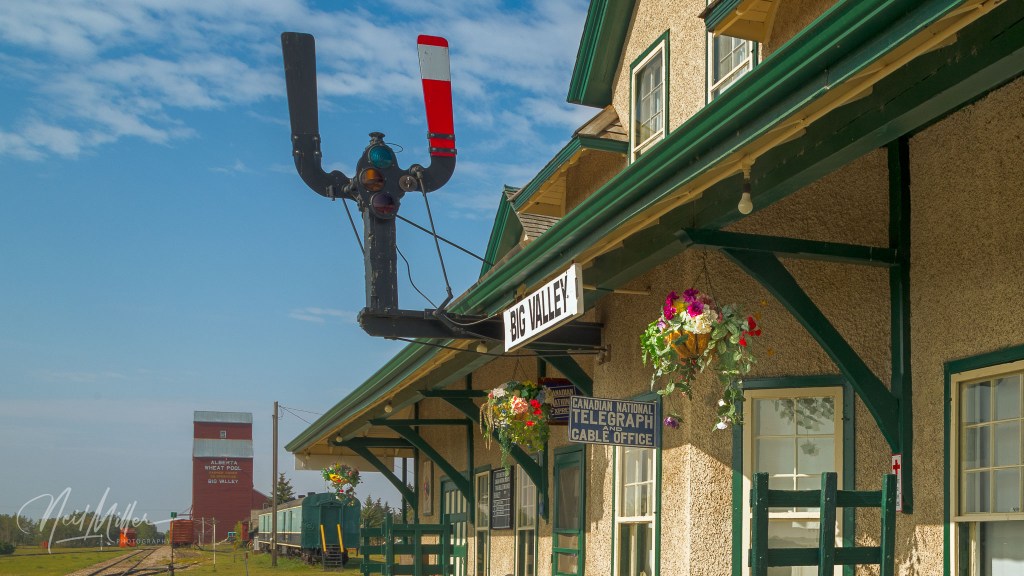
Our first stop on Day 2 was the village of Big Valley. Originally a center for ranching and farming, the village really came into being when the Canadian Northern Railway laid tracks through the area and established Big Valley as a major terminus. It became a village in 1914 and attained town status in 1920 with a population of over 800. Ranching, farming, railways. coal mining and oil have all played a part in the history of Big Valley. Today the population is about 350.
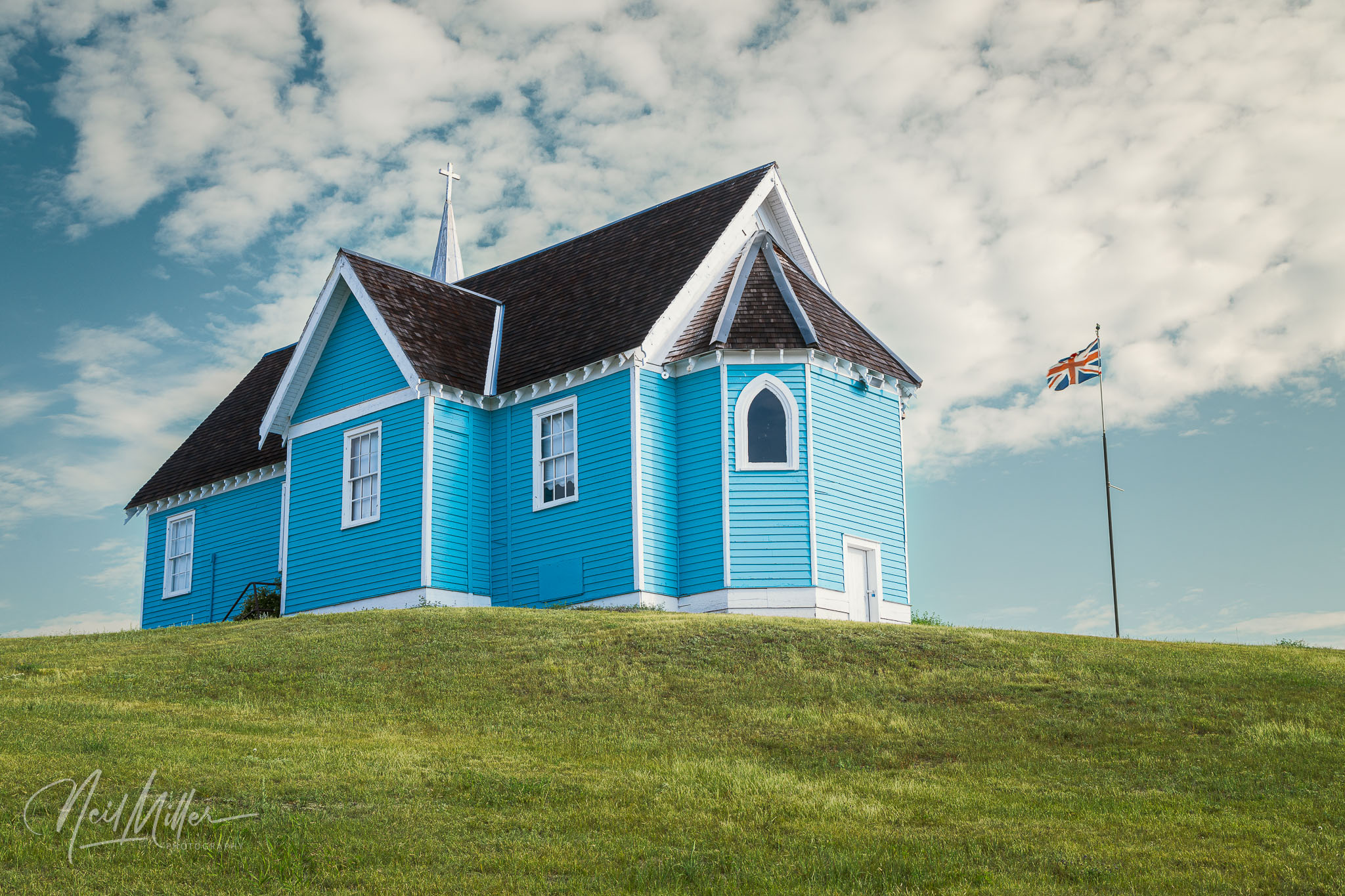
Well before arriving in the village, the prominent “church on the hill” came into view. The bright blue church, St. Edmund’s Anglican Church, was built in 1916. With a dwindling congregation, the last regular church service was held in the 1960’s. When a village homecoming was planned for 1974, it was decided that the conspicuous landmark needed a bit of TLC including a coat of paint. Unfortunately, no funds for paint were available however the local lumberyard donated a quantity of blue paint that it had been stuck with. The formerly cream-colored church became bright blue.


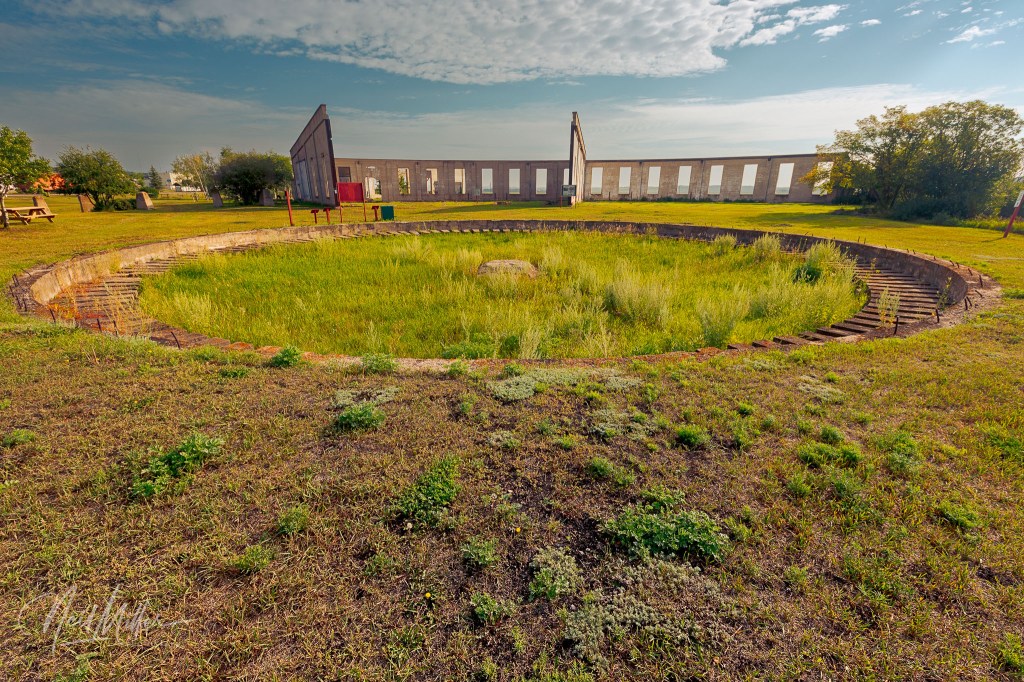
With the arrival of the Canadian Northern Railway in 1911, Big Valley became a major terminus complete with rail yards, roundhouse, water tower, coal dock, repair facilities and stockyards. This rail boom was somewhat short-lived. In 1919, Canadian Northern Railway and Grand Trunk Pacific Railway merged to form Canadian National Railways (CNR). In 1924 the CNR established its major facilities in Mirror, Hanna and Drumheller, bypassing Big Valley completely. After just over a decade, the rail heyday had ended. Today, the ruins of the roundhouse and rail yards are still visible.
In the photos below, you can see the remains of the giant turntable. A locomotive could be driven onto the turntable which could rotate and direct the locomotive into the appropriate service bay in the roundhouse beyond.

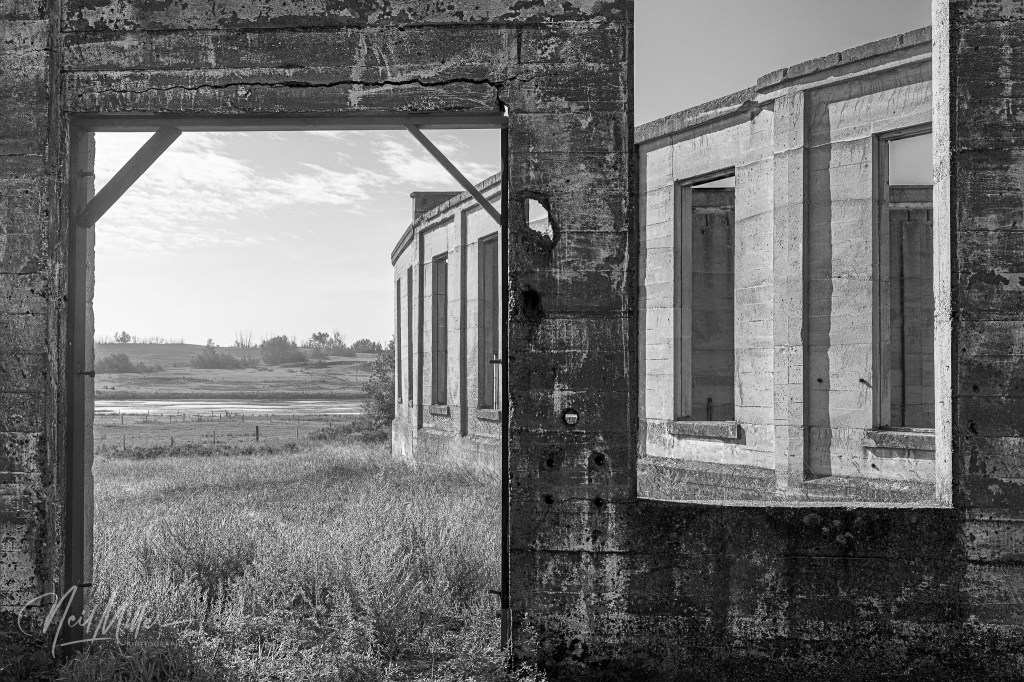
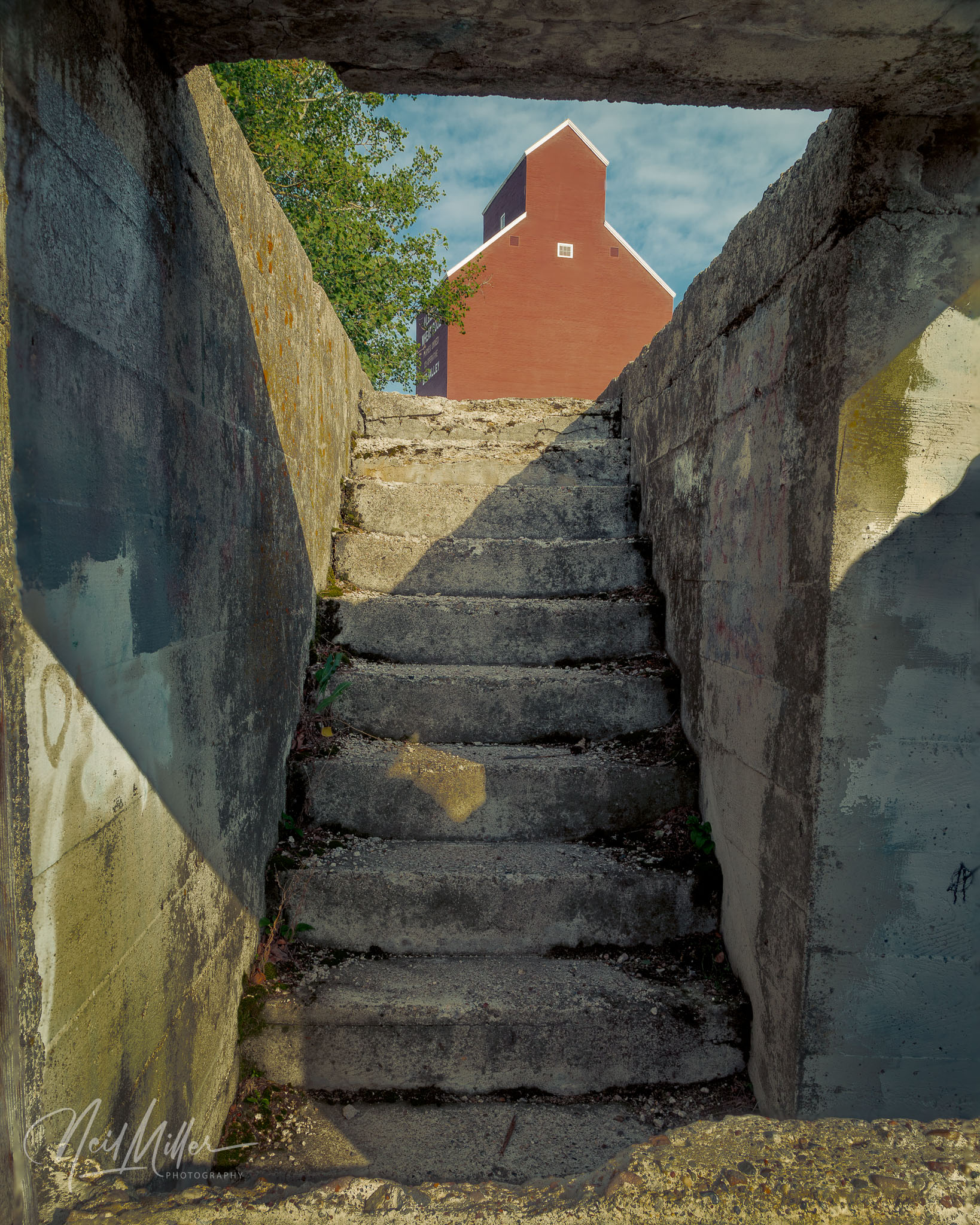
Various part of the ruins make great frames for the buildings beyond.


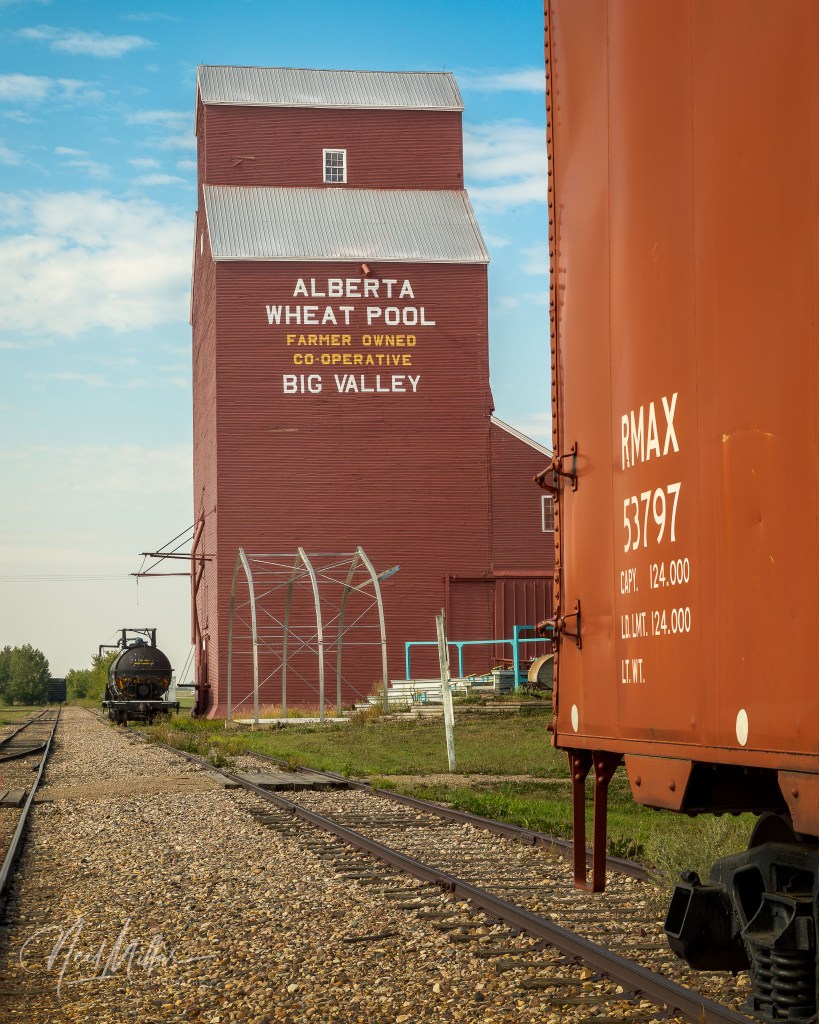
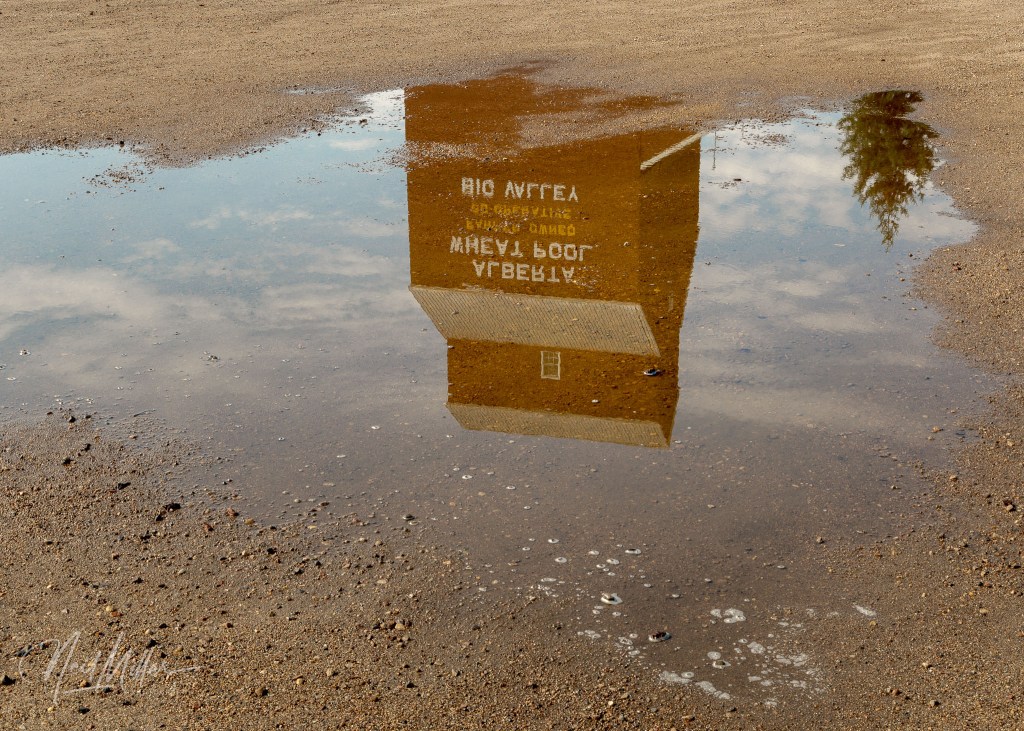
Here are a few more photos of the area.





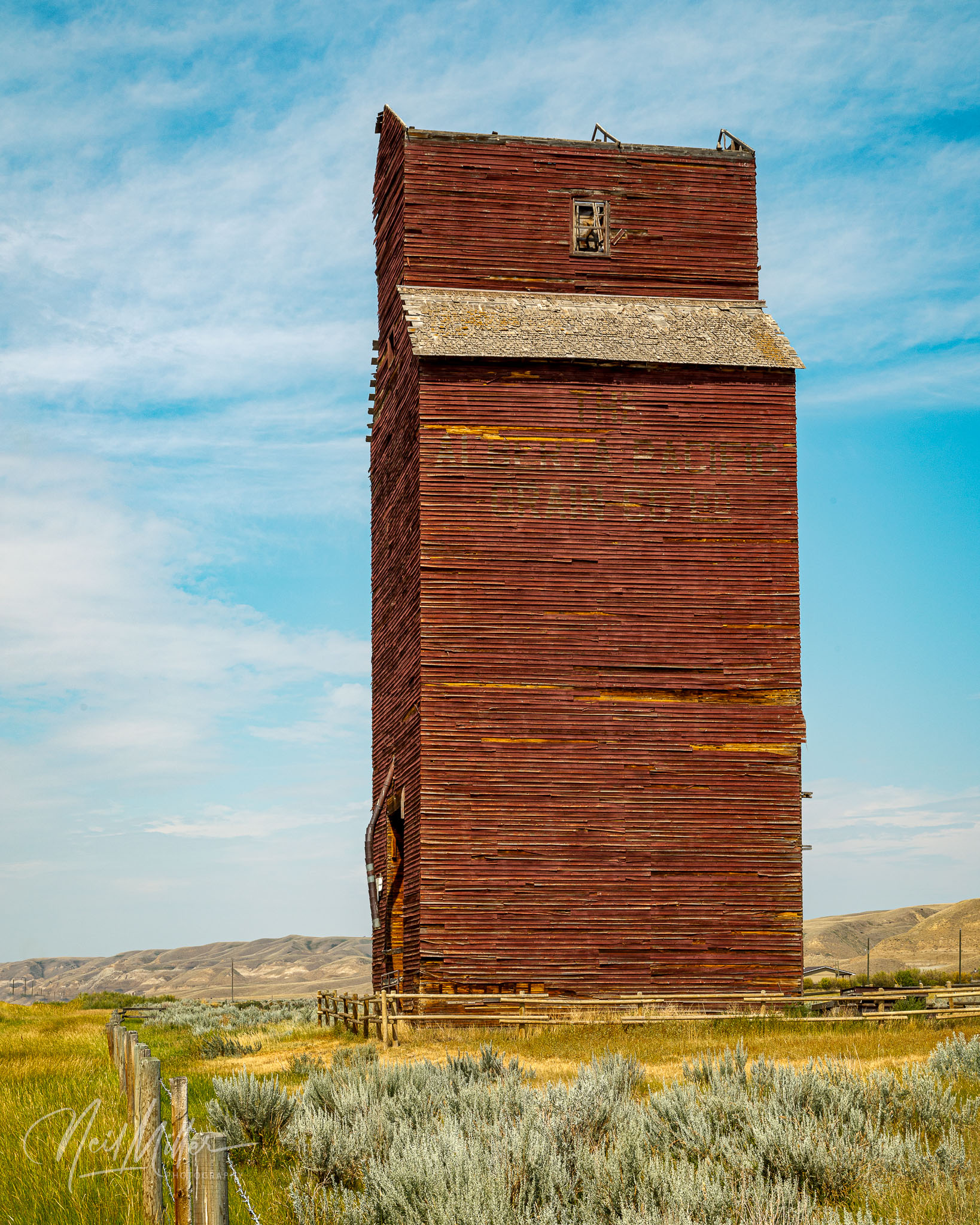
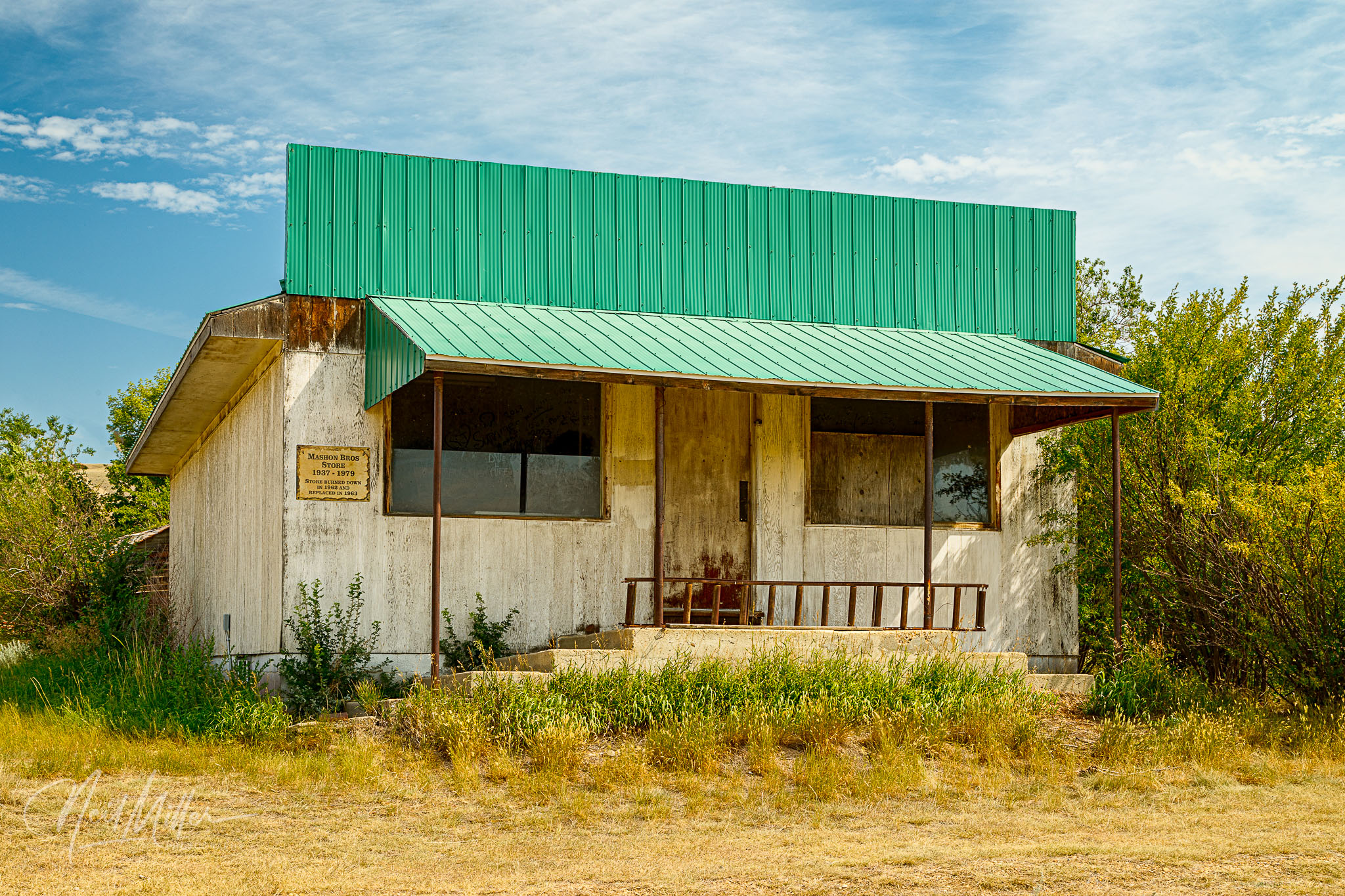
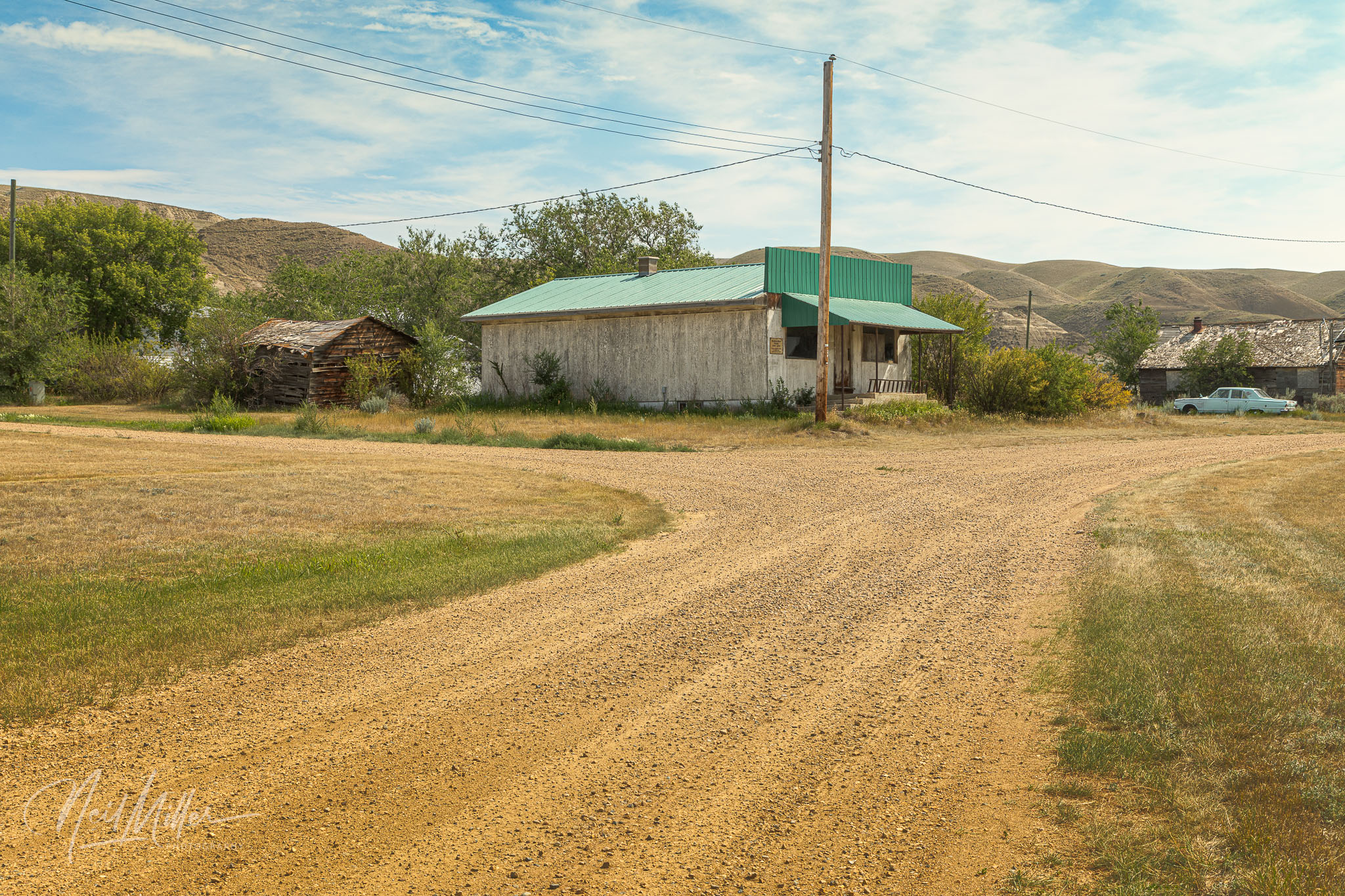
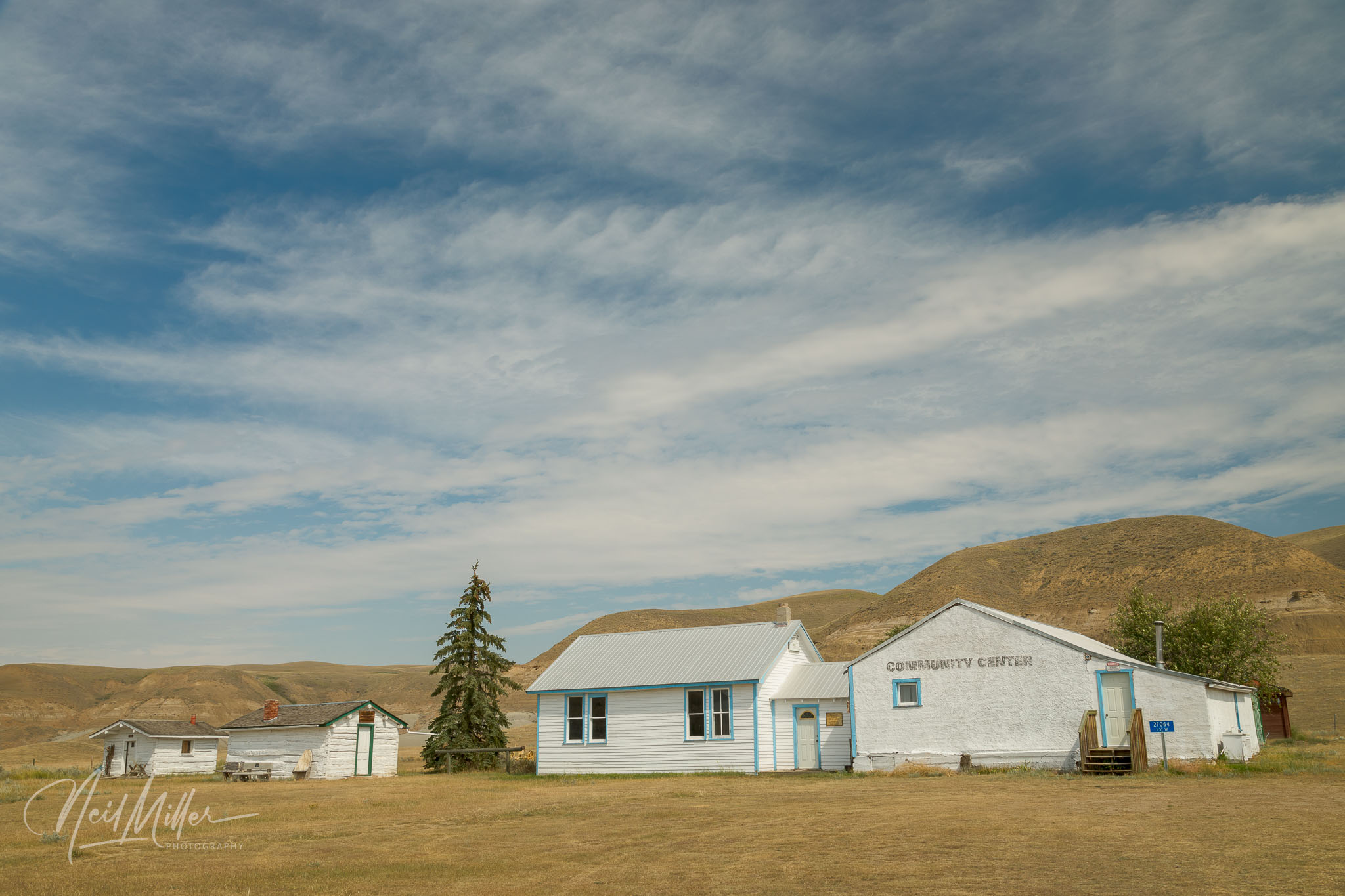
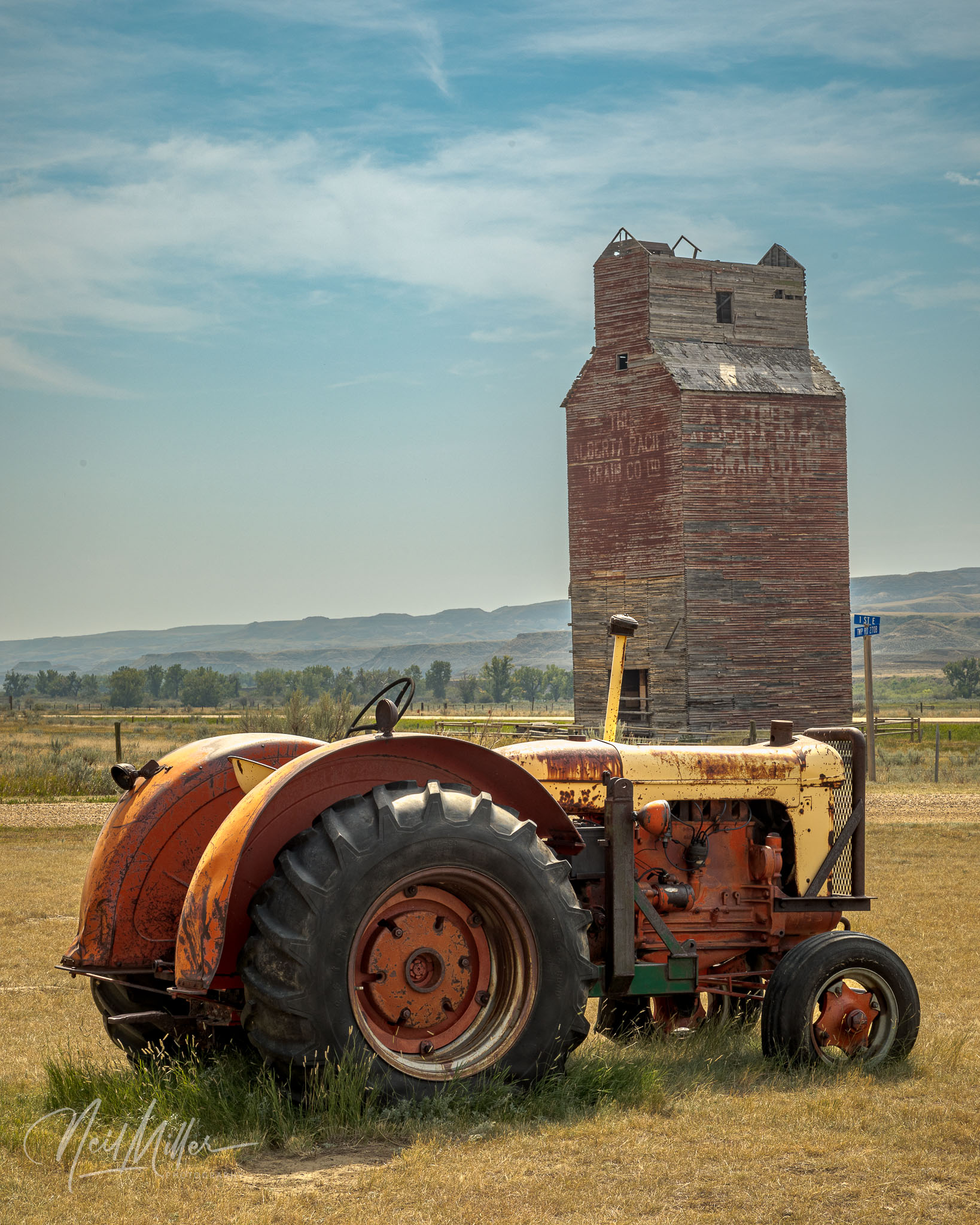
Our next stop was the smallest hamlet of our trip, with a current population of 4 permanent residents. The hamlet of Dorothy was named after Dorothy Wilson, a young girl who lived in the area when the local post office was established. Today there are the remains of various old buildings including a store, grain elevator, garage and two churches.






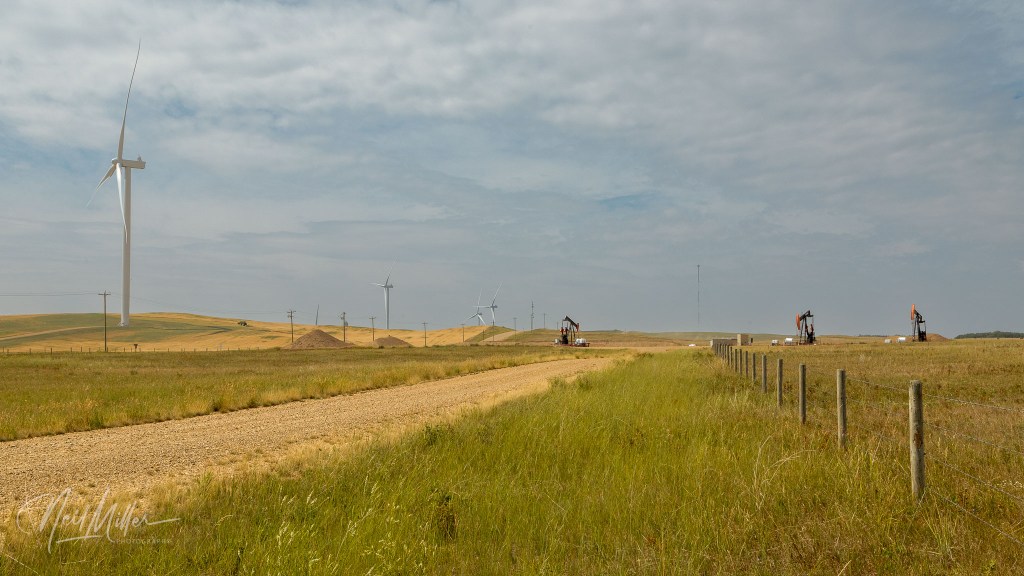
As we hit the road again, we came across this contrast in energy sources.
In the next instalment, we finish off our day in Rosebud and Carbon.
 Wind At Your Back
Leave a comment